- Home
- Products
- Customization
- About Us
- Blogs
- Contact Us
 Trampoline Socks
 Aqua Park Socks
 Hospital Slipper Socks
 Grip Football Socks
 Basketball Socks
 Badminton Socks
 Cycling Socks
 Running Socks
 Disposable Socks Bowling Alley Socks
 Disposable socks
 Warm Colorful Striped Crew Socks for Women
 Custom Unisex Crew Socks Breathable Socks
 Digital Printing Vintage Crew Socks
 Animal Fuzzy Cartoon Crew Socks for Women
 Cotton Flower Ankle Socks Low Cut Socks
 Thick Christmas Festival Crew Socks
 Cotton Cute Anti Slip Baby Ankle Socks with Cartoon
 Colorful Soft Baby Socks Anti-slip
 Non Slip Soft Ankle Baby Toddlers Socks
 Cartoon Baby Socks With Grips Crew Walking Socks
 Baby Socks Floor Grip Mid-tube Socks with Cartoon
Leave Your Message
-
Phone
-
E-mail
-
Whatsapp
-
WeChat

Global buyers increasingly need dependable Shoe Fitting Socks for footwear sampling, showroom trials, online retail, and factory quality checks. These socks look simple, yet their fiber blend, stretch recovery, toe construction, and hygiene control can influence fitting results. A loose heel can distort a trial. A rough seam can discourage repeat testing.
The World Footwear Yearbook 2024 reported approximately 23.9 billion pairs of shoes were produced globally in 2023. China remained the leading manufacturing base, accounting for more than half of worldwide production. This scale gives Chinese suppliers strong access to knitting equipment, yarn mills, packaging services, and export logistics. However, production volume alone does not prove supplier quality. Buyers still need verified samples, factory communication, and documented inspection procedures.
This guide examines China’s leading Shoe Fitting Socks suppliers for international buyers. It considers material options, minimum order quantities, customization, sampling speed, certifications, and quality consistency. Relevant evidence includes the World Footwear Yearbook 2024 and Textile Exchange’s Materials Market Report, which emphasize supply-chain transparency and material responsibility. These reports provide useful industry context, but they cannot replace supplier audits. That is an important limitation.
Some suppliers may offer low prices quickly. The cheaper quote may hide thinner yarn, unstable sizing, or weak packaging. Buyers should compare identical specifications, not attractive headlines. Practical checks include washing samples, measuring stretch recovery, reviewing factory photos, and confirming export experience. No ranking stays perfect forever. Market conditions change, and even an experienced buyer can miss a small production detail.
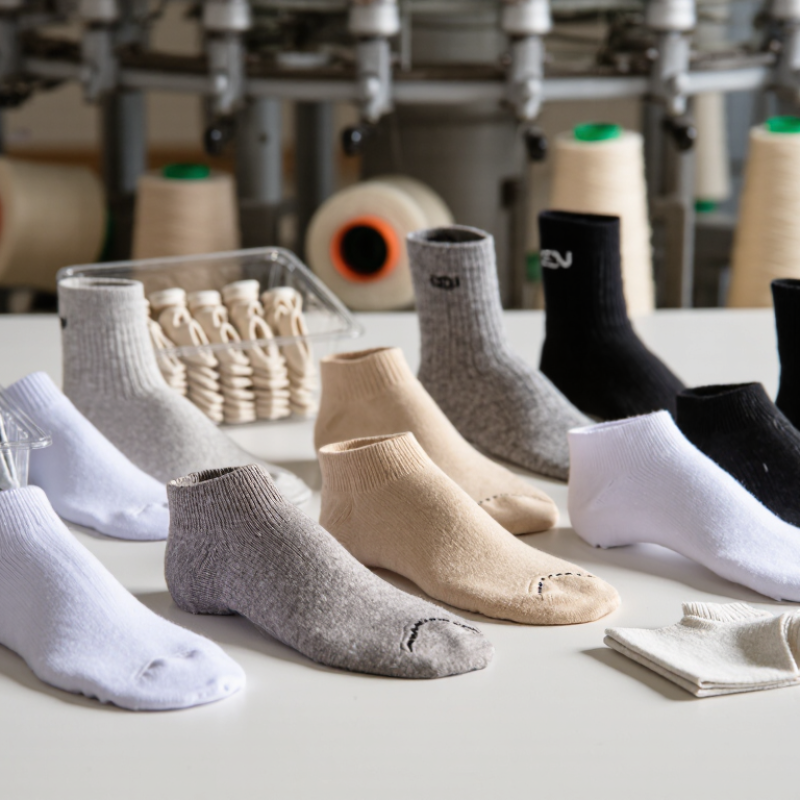
Shoe fitting socks are thin, close-fitting socks used when customers try on footwear. They reduce direct skin contact and create a more consistent fitting condition. Their smooth surface helps the foot slide into the shoe without excessive friction. Some styles include reinforced toes, elastic arches, or low-profile cuffs. Others are disposable and designed for short retail use.
In fitting practice, sock thickness matters. A thick cotton sock can make a shoe feel smaller. A very thin nylon sock may hide pressure around the toe box. Professional buyers should test several sizes with real footwear samples. The World Footwear Yearbook 2024 reported about 22.1 billion pairs of footwear were produced globally in 2023. That scale increases demand for reliable fitting tools across factories, showrooms, and export inspections. Small details matter.
China-based suppliers commonly offer nylon, polyester, cotton blends, and recycled fibers. Buyers should request fabric composition, weight, stretch recovery, colorfastness, and washing-test results. ISO 6330 is widely used for standardized textile washing procedures. Packaging should also protect socks from dust and moisture during long-distance transport. A low price is not proof of value. I have seen fitting socks that looked acceptable but loosened after repeated use. Supplier audits, sample checks, and size measurements remain necessary. The process is simple, but not careless.
| Dimension | Typical Information | How It Supports Shoe Fitting | Purchasing Considerations for Global Buyers |
|---|---|---|---|
| Product Definition | Shoe fitting socks are thin, close-fitting socks designed to create a hygienic and consistent layer between the foot and the shoe during fitting or measurement. | They provide a more realistic fitting condition than measuring with bare feet while adding minimal bulk inside the shoe. | Confirm whether the product is intended for retail fitting rooms, professional footwear testing, medical assessment, or general try-on use. |
| Common Product Forms | Available as no-show liners, ankle socks, quarter socks, crew-length socks, disposable foot covers, and reusable fitting socks. | Different lengths match different footwear types, including loafers, athletic shoes, boots, and formal shoes. | Choose the form according to the shoe category, fitting environment, hygiene policy, and expected replacement frequency. |
| Typical Materials | Common fibers include polyester, polyamide, cotton, polypropylene, elastane, and blends of these materials. | Synthetic fibers can provide light weight and quick drying, while cotton can improve softness. Elastane helps the sock stay close to the foot. | Request the fiber composition, fabric weight, stretch recovery, colorfastness, and care information before placing a bulk order. |
| Material Selection | Polyester and polyamide are often used for lightweight performance fabrics; cotton blends are commonly selected for comfort; polypropylene is known for low moisture absorption. | The material affects thickness, friction, moisture handling, drying speed, durability, and the perceived fit of the shoe. | For high-volume try-on use, prioritize consistent sizing, low lint, durable seams, and easy-care performance rather than appearance alone. |
| Thickness | Fitting socks are generally thin or lightweight, although cushioning versions are available for sports footwear evaluation. | A thin construction reduces the effect of the sock on toe room, heel hold, instep pressure, and overall shoe volume. | Ask for the fabric weight or measured thickness and test the sample with the target shoe models before production approval. |
| Stretch and Fit | Most fitting socks use knitted construction with stretch in the foot and opening. Elastane may be added for improved recovery. | A close fit helps prevent wrinkles, bunching, and excess fabric that could create misleading pressure points during fitting. | Evaluate stretch across the toe box, heel, arch, and opening. The sock should remain secure without leaving excessive marks on the leg. |
| Size Range | Sizes are commonly based on foot length or regional shoe-size systems. A supplier may offer adult, youth, or children’s size ranges. | Correct sizing reduces wrinkles and helps make repeated fittings more consistent between users. | Request a size chart in centimeters or millimeters and clarify the conversion method for EU, UK, US, and other target markets. |
| Toe Construction | Options include standard stitched toes, linked toes, and low-profile or seamless toe areas. | A flatter toe can reduce localized pressure and make toe-box assessment more representative. | Inspect the toe seam on samples, especially when the socks will be used for narrow, formal, or performance footwear. |
| Heel Construction | Heel shapes may be formed with a defined heel pocket or produced as a simpler tubular design. | A shaped heel generally helps the sock stay in position and reduces movement during walking tests. | Check heel slippage and fabric migration during actual use rather than relying only on flat measurements. |
| Hygiene Options | Products may be reusable and washable or designed as single-use foot covers for high-turnover fitting environments. | They create a cleaner barrier between the user’s foot and the shoe interior. | For reusable products, confirm washing instructions, shrinkage, colorfastness, drying requirements, and expected service life. For disposable products, assess material strength and packaging efficiency. |
| Reusable Socks | Usually knitted from durable yarns and intended for repeated laundering and handling. | They can provide a consistent fitting layer when maintained in a clean and uniform condition. | Compare total cost of ownership, including washing, sorting, replacement, labor, and inventory management. |
| Disposable Foot Covers | Often made from lightweight nonwoven or knitted materials and individually or bulk packed. | They support fast turnover and reduce direct contact with the inside of footwear during try-on. | Review tear resistance, elastic opening performance, package count, waste requirements, and applicable local disposal rules. |
| Moisture Management | Moisture behavior depends on fiber type, yarn structure, fabric density, and finishing treatment. | Better moisture management can improve comfort during longer fitting sessions and repeated walking tests. | Use practical wear trials and, where necessary, request laboratory data for moisture absorption, drying, or wicking performance. |
| Grip and Stability | Some designs include elastic support, textured areas, or grip elements, while basic fitting socks may have a smooth sole. | Stability features can reduce sock movement, but excessive grip or thickness may alter the natural feel of the footwear. | Match the sole design to the purpose. Use smooth, low-profile constructions when the goal is neutral shoe-volume assessment. |
| Color and Appearance | White, black, grey, skin-tone, and other solid colors are commonly used. Neutral colors are frequent in professional fitting environments. | Clean, consistent colors support a professional presentation and make visible contamination easier to identify. | Specify color references, colorfastness expectations, and acceptable shade variation for repeat orders. |
| Customization | Possible customizations include size range, length, material blend, color, packaging, labeling, and limited pattern changes. | Customization allows the sock to match a particular footwear category or fitting procedure. | Request a pre-production sample and confirm minimum order quantity, sampling fees, tooling needs, lead time, and approval procedures. |
| Quality Checks | Useful checks include dimensions, weight, seam quality, stretch recovery, holes, stains, loose threads, odor, labeling, and packaging accuracy. | Consistent construction helps prevent the sock itself from affecting fit observations. | Define inspection criteria in writing and use an approved sample or tolerance sheet for production comparison. |
| Relevant Testing Areas | Depending on the destination and intended use, buyers may review fiber composition, colorfastness, dimensional stability, tensile strength, and restricted substances. | Testing helps verify that the product is safe, stable, and suitable for repeated contact with skin and footwear. | Identify the regulations of the destination market and request appropriate test reports from an independent laboratory when required. |
| Packaging | Packaging may use bulk cartons, polybags, paper bands, retail-ready packs, or individually sealed units. | Packaging protects cleanliness and supports inventory counting and distribution. | Balance hygiene, moisture protection, packaging volume, labeling requirements, and recyclable-material preferences. |
| Supplier Evaluation | Important evaluation points include product consistency, knitting capability, sample accuracy, quality control, communication, packaging capacity, and export documentation. | A reliable production process helps ensure that the fitting sock behaves consistently across shipments. | Compare samples from multiple qualified manufacturers without relying solely on price. Verify production capacity and documented quality procedures. |
| Typical Uses | Uses include footwear retail try-on, shoe last and prototype testing, occupational footwear evaluation, sports footwear trials, medical or orthotic assessments, and fitting events. | They standardize the layer worn during the fitting process and help improve hygiene management. | Specify the intended application because a disposable retail foot cover may not meet the durability needs of repeated laboratory or field testing. |
| Recommended Buying Process | Define the use case, prepare a technical specification, request samples, conduct wear trials, approve quality standards, confirm packaging, and establish inspection procedures. | A structured process reduces the risk that thickness, stretch, or sizing differences will distort fitting results. | Include measurements, material composition, tolerances, packing method, delivery terms, documentation, and acceptance criteria in the purchase agreement. |