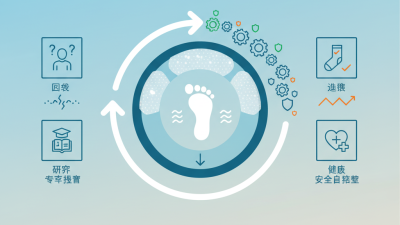
When customers try footwear, socks become a direct contact layer between skin, shoes, floors, and fitting-room surfaces. That detail matters. Hygienic Trial Socks help wholesale buyers reduce avoidable contamination concerns while improving the customer experience. However, hygiene is not the same as sterility. A disposable sock may look clean yet fail if its packaging, storage, or dispensing process is weak.
The World Health Organization reports that effective infection prevention and control programs can reduce healthcare-associated infections by up to 70%. Retail footwear is not a hospital environment, but the principle remains useful: prevention depends on consistent systems. The International Scientific Forum on Home Hygiene, associated with hygiene expert Professor Sally Bloomfield, explains that hygiene focuses on managing infection risks rather than eliminating every microorganism. That distinction should guide purchasing decisions. Buyers need to examine fiber softness, toe-seam comfort, cuff elasticity, individual wrapping, material traceability, and disposal instructions. Small details matter.
A practical trial is essential. Test socks beside the fitting area. Check whether they tear when pulled over broad feet. Observe whether the packet opens cleanly. Ask staff how quickly used pairs accumulate. These findings reveal more than a product brochure. Industry forecasts from Grand View Research indicate continued growth in global hosiery demand, increasing pressure for reliable, scalable supply. Yet wholesale buyers should question broad market claims. “Hygienic” can become an empty label. The better choice combines documented materials, clear quality controls, sensible packaging, and dependable replenishment. Perfect hygiene is unrealistic. Better purchasing decisions are not.
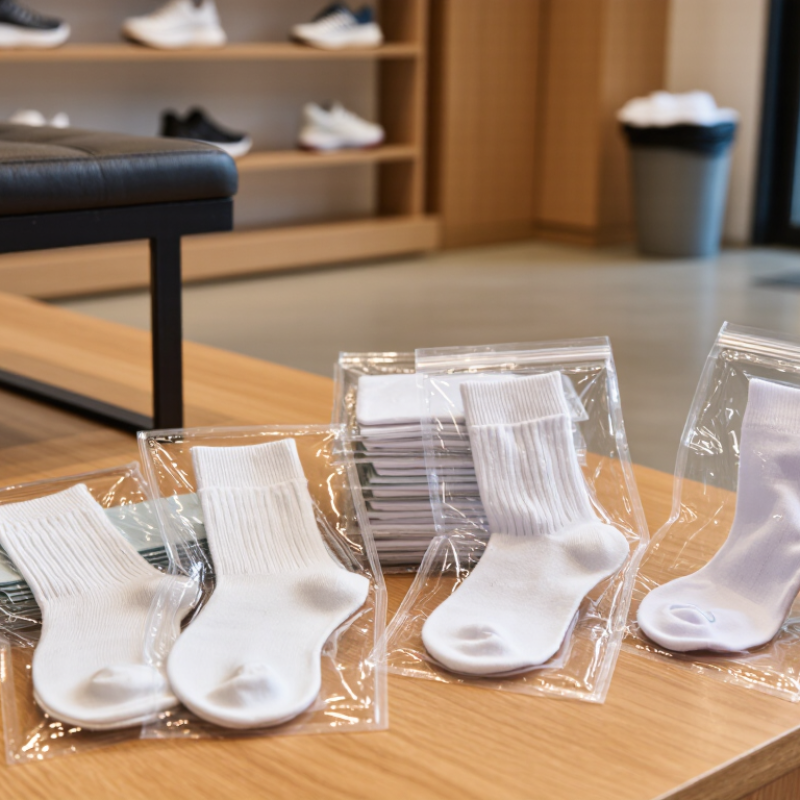
Wholesale trial socks need a hygiene standard before they enter sampling rooms or retail counters. That standard should begin with condition, not appearance alone. Each pair should be new, dry, odor-free, and free from visible stains, loose fibers, or damaged packaging. Use skin-contact materials that are clearly identified by fiber content. Ask suppliers for batch records and applicable safety-test documents.
Paperwork matters. However, documents cannot replace inspection. Open a small sample from every shipment. Check the toe seam, elastic, inner surface, and packing seal. Clean gloves, covered storage, and dry cartons reduce avoidable contact. Trial pairs should never return to unopened stock after fitting. Mark them as used and remove them through an appropriate textile-waste process.
Wholesale buyers should define handling rules for staff and customers. Provide a fresh pair for each fitting, with a simple disposal point nearby. Record the date, batch number, inspector, and any complaint. This creates traceability when a problem appears weeks later. Do not rely on fragrance to suggest cleanliness. Strong perfume can hide moisture or chemical odors. That detail is easy to miss.
One weakness deserves honest attention: hygiene checks often stop at the carton. A better standard follows the sock through receiving, storage, fitting, and replacement. Review the process after real customer use. Some rules may need adjustment.
How to Choose Hygienic Trial Socks for Wholesale Buyers?
Assess Materials, Fit, and Skin-Safety Features
Material selection affects comfort, hygiene, and repeat customer confidence. Look for breathable cotton blends, moisture-managing fibers, and smooth internal surfaces. A soft touch is useful, but it does not prove skin safety. Ask suppliers for fabric composition, colorfastness results, and irritation-testing records. Low-lint yarns can also reduce loose fibers inside shoes.
Fit requires practical testing. Check several sizes on different foot shapes, not only a standard model. The heel should stay in place without tight elastic marks. Toe seams must feel flat, especially during a ten-minute fitting session. Avoid socks that stretch excessively after one use. That mistake is easy to miss.
Skin-safe details deserve close inspection. Choose individually packed pairs when possible, and confirm clean handling during production and storage. Latex-free elastic may help customers with known sensitivities. Review dye controls and washing instructions before placing a large order. A pleasant factory sample can still change after washing. Test multiple batches instead of trusting one delivery.
Wholesale buyers should record odor, seam pressure, fabric shedding, and package condition during evaluation. Small flaws become expensive when multiplied across thousands of pairs. I would not approve a sample simply because it feels soft. Comfort, hygiene evidence, and consistent sizing must agree. Sometimes they do not.
Assessment framework for materials, fit, and skin-safety features
The chart uses a transparent 100-point procurement score: material performance accounts for 40 points, fit and sizing for 30 points, and skin-safety features for 30 points. Buyers should verify fiber content, seam construction, size consistency, dye safety documentation, and wash durability before placing a wholesale order.
Wholesale buyers should treat trial socks as controlled samples, not ordinary display stock. The packaging must protect cleanliness from factory packing to the fitting area. Use a sealed inner pouch, a visible tamper indicator, and a dry outer carton. Add batch numbers, fiber content, size, washing guidance, and packing dates. These details support traceability when several cartons arrive together. Packaging should also prevent crushed cuffs and loose fibers. A beautiful box is not enough.
Try-on handling needs a written routine that staff can repeat. Offer disposable foot liners, clean seating, and a separate tray for worn samples. Ask shoppers to handle one pair at a time. Staff should sanitize hands before restocking sealed units. The World Health Organization recommends alcohol-based hand rubbing for about 20–30 seconds when appropriate. That timing is useful, although retail teams may not follow it perfectly. Keep tried-on socks away from unopened inventory. Do not reseal them as new.
The NRF and Appriss Retail 2024 Consumer Returns in Retail report estimated U.S. retail returns at $890 billion in 2024, equal to 16.9% of annual sales. Clear try-on controls can reduce avoidable disputes and inspection costs. Wholesale buyers should test the process during a busy fitting session, not only during a quiet audit. Check whether liners run out, labels detach, or staff skip records. Small failures matter. A perfect procedure may be unrealistic, but an untested one is worse.
| Evaluation Dimension | Recommended Standard | What Wholesale Buyers Should Check | Suggested Rating | Wholesale Risk if Missing |
|---|---|---|---|---|
| Individual Packaging | Each pair should be enclosed in a clean, sealed individual package before shipment or store display. | Confirm that packaging is intact, dry, dust-free, and sealed without visible openings or loose edges. | Pass / Fail | Exposure to dust, handling contamination, and customer complaints about product cleanliness. |
| Packaging Material | Use packaging that protects the socks from moisture, abrasion, and ordinary warehouse handling. | Review material strength, closure quality, ventilation needs, recyclability, and compatibility with labeling requirements. | 1–5 | Torn or weakened packaging may allow contamination, product loss, or damage during transport. |
| Moisture Protection | Products should remain dry throughout storage and transport, with outer cartons protected from water exposure. | Inspect cartons for water stains, condensation, dampness, odor, and evidence of improper storage. | Pass / Fail | Damp textile fibers can develop odor, staining, mildew, or reduced shelf appeal. |
| Clean Packing Area | Packing should take place on clean, dry surfaces away from food, chemicals, waste, and unnecessary foot traffic. | Request a documented cleaning schedule and verify that packing tables, tools, and storage zones are orderly. | 1–5 | Poor environmental control increases the chance of visible dirt, foreign fibers, or package contamination. |
| Staff Hygiene | Personnel handling unpackaged socks should use clean hands and follow site-specific hygiene procedures. | Check whether hand hygiene, clean workwear, illness reporting, and no-food policies are defined and followed. | 1–5 | Inconsistent handling may create hygiene concerns and weaken retailer confidence. |
| Pre-Shipment Inspection | Inspect size, color, pair matching, stitching, odor, stains, and packaging condition before dispatch. | Ask for an inspection checklist and define the acceptable defect level in the purchase agreement. | 1–5 | Defects discovered after arrival can increase sorting labor, returns, and delayed sales. |
| Trial Pair Identification | Trial or display pairs should be clearly separated from unopened saleable inventory. | Use visible “try-on pair” identification and maintain a simple record of pairs placed on the sales floor. | Pass / Fail | Used or handled merchandise may be accidentally returned to unopened stock. |
| Try-On Barrier | Customers should try socks over clean hosiery or use a disposable foot covering when feasible. | Check whether staff provide clear instructions and whether disposable coverings are available in suitable sizes. | 1–5 | Direct skin contact increases hygiene concerns and makes the trial pair unsuitable for normal resale. |
| Try-On Area | The fitting area should be clean, well-lit, dry, and supplied with a seat and an appropriate disposal container. | Review cleaning frequency, floor condition, seating cleanliness, and separation from waste or wet areas. | 1–5 | A poorly maintained area can transfer dirt to socks and negatively affect customer perception. |
| Post-Try-On Disposition | Any pair worn directly or returned after handling should be quarantined and not restocked as new. | Confirm a documented process for disposal, donation where permitted, laundering where appropriate, or staff-use allocation. | Pass / Fail | Uncontrolled restocking can create hygiene risks and undermine “new product” claims. |
| Storage and Rotation | Store packaged socks off the floor, away from direct sunlight, strong odors, chemicals, and excessive humidity. | Verify shelf organization, carton condition, stock rotation, and protection from pests or warehouse dust. | 1–5 | Incorrect storage may cause odor, discoloration, packaging deterioration, and avoidable inventory loss. |
| Traceability and Records | Each shipment should be traceable through purchase order, production or packing date, quantity, and inspection records. | Request batch references, carton counts, inspection results, and a process for handling complaints or recalls. | 1–5 | Limited records make it difficult to isolate affected stock or investigate quality issues. |
When choosing hygienic trial socks, inspect the supplier before comparing prices.
Request sealed samples with production dates, lot numbers, fiber content, and washing instructions. In warehouse checks, I look for dry packaging, clean seams, loose fibers, and unusual odors. A certificate alone cannot replace handling evidence. Ask whether samples come from regular production or a specially prepared batch.
Compare certifications by purpose.
OEKO-TEX STANDARD 100 tests finished textile components for harmful substances, while GOTS covers organic-fiber processing and supply-chain requirements. Neither certificate automatically proves sterile socks. Ask for the certificate number, scope, expiry date, and test laboratory. For odor or antimicrobial claims, request test methods such as ISO 20743 and recent laboratory results. The Textile Exchange Materials Market Report 2024 reported 124 million tonnes of global fiber production in 2023. Traceability is becoming harder, not easier.
Minimum orders need practical testing.
A low MOQ helps buyers compare sizes, colors, packaging, and washing performance without excessive stock. Yet very low MOQs may indicate unstable production or higher unit costs. Request a pilot order of 50–200 pairs, if available, and inspect every carton. Record defects after one wash. That step is easy to miss. Suppliers should explain lead times, replacement policies, storage conditions, and whether recycled fibers or dyes change the testing requirements. The best offer is not always the cheapest; I have rejected attractive samples because packaging absorbed moisture during transit.
A sample is not merely a size check. It is your first hygiene control. Request unused pairs in sealed, dust-resistant packaging, with production dates and lot numbers. Check whether the package opens cleanly and whether the socks carry a sharp chemical smell. That smell should not be ignored.
For each style, test several pairs across sizes, colors, and production lots. Inspect toe seams, elastic recovery, loose fibers, and inside labels under bright light. Wear one pair for several hours, then record heat, dampness, slipping, and odor.
Wash another pair according to the proposed care label. A clean-looking sock can still shrink unevenly after washing. This is where my own buying experience became less comfortable: one attractive sample failed after only two washes.
Use measurable checks when possible. AATCC TM195 evaluates liquid moisture management, while ISO 3071 can assess textile pH after extraction. These tests cannot prove complete product safety, but they reveal useful quality differences.
Textile Exchange’s 2024 Materials Market Report states that global fiber production reached about 124 million tonnes in 2023.
Wasteful bulk mistakes matter within that scale.
Keep rejected samples separated, and ask the supplier for corrective samples before approving packaging or quantity. Test records should include photos, wash settings, dates, and the person responsible for approval. Small details are easy to miss.