Leave Your Message
Design Drawing File Upload X

How to Choose the Best Safety Water Shoes in 2026?

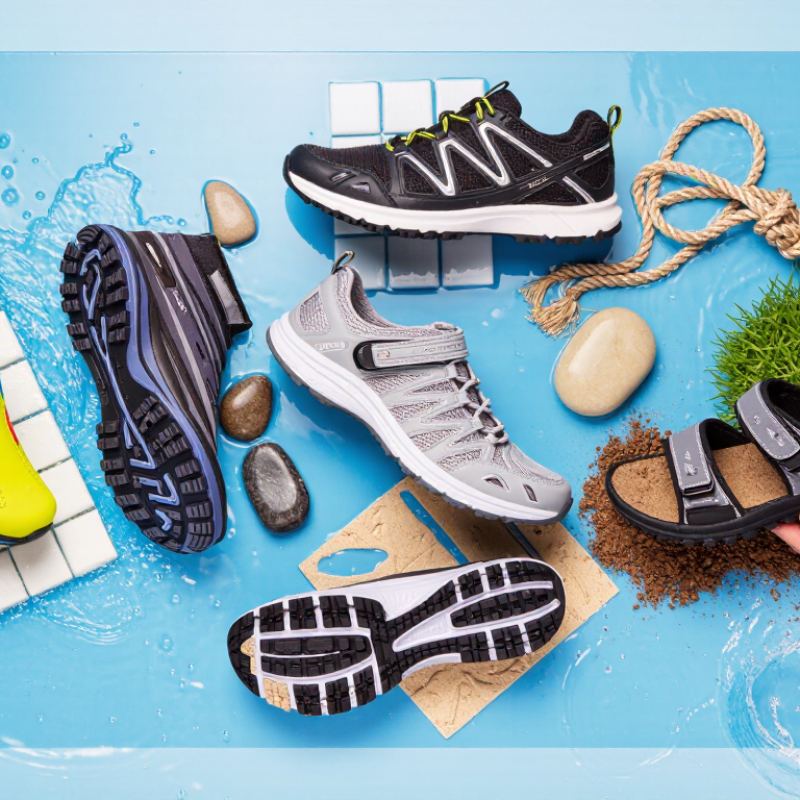
Choosing the best Safety Water Shoes in 2026 requires more than checking colors, prices, or online ratings. Wet surfaces create changing hazards. Pool tiles, boat decks, river stones, and muddy trails demand different protection. A shoe that feels secure indoors may slide outdoors. That difference matters.

Dr. Chris Nester, a footwear biomechanics researcher, offers a practical principle: “Footwear should match the task and the environment.” This advice guides our comparison. We will examine outsole grip, drainage speed, toe protection, ankle stability, material durability, and overall fit. We will also consider how quickly shoes dry after a long swim. Small details matter. A loose heel can cause blisters. A stiff upper can restrict movement. Poor drainage can leave feet heavy and uncomfortable.

Real-world testing remains essential. Press the outsole against wet tile. Check whether sand collects around the drainage holes. Bend the shoe gently, then inspect the seams. These simple checks reveal weaknesses that product photos often hide. Still, no review can predict every user’s experience. Foot shape differs. Water conditions change. Even careful buyers can choose incorrectly. This guide may not remove every doubt, but it can make the decision more informed, safer, and more practical. Expect honest comparisons, useful limitations, and selection advice based on actual water activities rather than marketing claims.
How to Choose the Best Safety Water Shoes in 2026?

Define Water Hazards Using EN ISO 20345:2021 Safety Footwear Categories

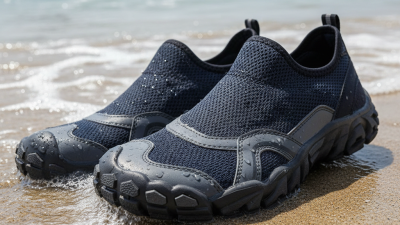
Choosing the Best Safety Water Shoes in 2026 means defining the water hazard first. EN ISO 20345:2021 separates protection levels clearly. SB offers basic toe protection, but no water-performance claim. S1 suits dry areas with occasional splashes. S2 adds resistance to water penetration and absorption in the upper. For wet floors with sharp debris, S3 adds penetration resistance and a cleated outsole. S6 provides whole-footwear water resistance, while S7 combines water resistance with S3-level protection. These categories matter more than marketing language such as “waterproof work shoe.”

The Health and Safety Executive reported 138 worker fatalities in Great Britain during 2023/24. Its injury data also identifies slips and trips as persistent workplace hazards. EU-OSHA risk assessments repeatedly connect wet surfaces, poor housekeeping, and unsuitable footwear. Still, water resistance does not guarantee grip. A smooth outsole may slide on algae, oil, or polished concrete. I have seen workers choose S2 footwear for prolonged flooding. That choice looks reasonable, but it can fail quickly. The exposure duration, water depth, contaminants, temperature, and underfoot debris should guide the category.

Tips: Check the exact EN ISO 20345:2021 marking on the tongue or label. Choose S2 for splash-prone work, S6 for extended wet exposure, and S7 where puncture risks exist. Test the fit with work socks, and inspect outsole wear weekly. No category replaces site-specific training. Safety decisions need revision when the environment changes.
How to Choose the Best Safety Water Shoes in 2026?

Water-related protection required by EN ISO 20345:2021 safety footwear categories. A value of 1 means the feature is included as a category requirement; 0 means it is not required by that category.

S2 and S3 categories require water penetration and absorption resistance of the upper (WPA). S6 and S7 add resistance of the whole footwear to water (WR), making them the strongest standard categories for prolonged wet conditions. S4 and S5 use all-rubber or all-polymeric construction; S5 additionally includes penetration resistance and a cleated outsole. EN ISO 20345 categories do not define protection against water depth, chemicals, heat, or biological hazards, so the work environment should be assessed separately.

Evaluate Slip Resistance Under EN ISO 20347:2022 Test Requirements

How to Choose the Best Safety Water Shoes in 2026?

When choosing water shoes, do not judge grip by the tread pattern alone. A deep-looking sole can still slide on algae-covered tiles or wet metal steps. EN ISO 20347:2022 provides a controlled method for evaluating slip resistance. Check the product documentation for compliance with this standard and its stated slip-resistance marking.

The basic test uses a ceramic tile contaminated with a defined cleaning solution. The shoe is assessed during flat contact and heel contact. An additional SR test uses glycerol to create a more challenging surface. These laboratory conditions help compare footwear fairly, but they cannot reproduce every riverbank, pool deck, or boat floor. That limitation matters. Real water often carries sand, oil, soap, or plant residue. I would treat a certified result as useful evidence, not a guarantee.

Tips: Bend the shoe slightly and inspect the tread channels. They should release water instead of trapping a smooth film. Try walking slowly on a wet, clean surface before long use. Check the test report, not only marketing words. Fit also matters; a loose heel can undermine good traction. I once trusted a thick outsole that felt secure indoors, but it became awkward on sloped wet concrete. Testing the actual environment would have exposed that mistake earlier.

How to Choose the Best Safety Water Shoes in 2026? - Evaluate Slip Resistance Under EN ISO 20347:2022 Test Requirements

Evaluation Dimension EN ISO 20347:2022 Test or Reference Required or Useful Data Recommended Interpretation Evidence to Request Assessment Type
Basic Slip Resistance Ceramic tile contaminated with a sodium lauryl sulfate solution under the standard test configuration. Forward heel coefficient of friction: ≥ 0.28
Flat contact coefficient of friction: ≥ 0.31
Both required measurements should meet the applicable threshold. A single high result does not compensate for a failed direction or contact position. Complete laboratory report identifying the footwear size, test direction, test surface, contaminant and measured coefficients. Standard requirement
Additional SR Slip Test Additional slip-resistance test on a ceramic tile contaminated with glycerol. Forward heel coefficient of friction: ≥ 0.14
Flat contact coefficient of friction: ≥ 0.19
Prefer models that pass the additional glycerol test when footwear may encounter oily, greasy or very low-friction wet surfaces. Test report showing that the additional SR test was performed and passed in the required configurations. Standard requirement
SR Marking Footwear that passes the additional glycerol-based test may use the SR designation according to the standard marking system. Pass status: SR
Not tested or not applicable: do not treat an absent SR marking as a pass.
Do not confuse a general “non-slip” claim with an independently verified SR result. Product marking, declaration of conformity and supporting test documentation. Standard reference
Water Drainage EN ISO 20347:2022 slip testing does not establish how quickly a water shoe drains during use. Check drainage openings, mesh area, internal water retention and drying time using a controlled wear trial. Choose a design that expels water without creating openings that expose the foot to sharp objects or reduce structural protection. Construction drawings, drainage description and a documented wet-use evaluation. Field evaluation
Outsole Tread The standard slip result is determined by laboratory testing; tread depth alone is not a substitute for the required friction test. Record tread pattern, contact area, grooves, rubber hardness and wear condition. Use measured friction values as the primary comparison. Wide, well-spaced grooves can help release water, but aggressive-looking tread is not proof of compliance. Outsole specification, tread photographs and laboratory friction results from unworn and, where relevant, worn samples. Performance indicator
Wet-Surface Use The ceramic-tile tests provide standardized comparison conditions and do not represent every pool deck, riverbed, boat deck or industrial floor. Identify the intended surface: smooth ceramic, painted metal, concrete, rock, mud or mixed terrain. Select footwear using both the standard report and a site-specific risk assessment. Avoid assuming that a pass on one surface guarantees grip on another. Workplace hazard assessment and footwear-use instructions. Application review
Toe Protection EN ISO 20347:2022 covers occupational footwear without a mandatory protective toe cap. Toe protection is a separate product requirement when required by the hazard. Confirm whether the task requires occupational footwear only or safety footwear with impact and compression protection under the applicable safety-footwear standard. Do not classify a soft water shoe as protective footwear merely because its outsole passes a slip test. Declaration of conformity, protective-toe test evidence and product classification. Scope check
Water Resistance Water shoes are often designed to admit and drain water. Water resistance and water penetration protection are different performance claims. Specify the intended function: rapid drainage, water-resistant upper, or water penetration resistance. Choose rapid drainage for swimming and frequent immersion; choose water-resistant construction for splash protection and dry-foot requirements. Material specification and the relevant water-resistance or water-penetration test report, if claimed. Application review
Fit and Retention Slip-resistance laboratory results do not evaluate how securely the shoe remains attached to the foot during walking, climbing or immersion. Check heel hold, adjustable closure, toe clearance, arch comfort and stability when wet. A secure fit reduces foot movement inside the shoe and helps maintain the tested outsole contact position. Fit trials in the intended size, including wet conditions and the socks or protective equipment used at work. Field evaluation
Material Durability Slip performance can change as the outsole wears, hardens, cracks or becomes contaminated. Review abrasion resistance, flex durability, outsole bonding and resistance to the chemicals present at the workplace. Prefer products with documented durability testing and a clear replacement limit for worn tread or damaged uppers. Material data sheets, durability test reports and maintenance instructions. Lifecycle review
Cleaning and Contamination Laboratory slip tests use specified contaminants; real-world mud, algae, oil, sunscreen, detergent or sand can alter friction. Record cleaning method, allowable detergents and inspection frequency. Choose soles that can be rinsed easily and establish a cleaning procedure before the footwear is returned to service. Care instructions, contamination-control procedure and inspection checklist. Operational control
Documentation Quality Compliance should be supported by traceable technical documentation rather than marketing language alone. Verify product identification, tested size, standard edition, laboratory identity, test date and pass/fail results. Reject incomplete reports that do not clearly connect the tested sample to the supplied footwear. Declaration of conformity, laboratory report, user instructions and product traceability records. Verification step

Selection rule: For wet-area occupational use, first verify the basic slip-resistance thresholds, then prefer documented SR performance when glycerol-like contamination is possible. Complete the decision with fit, drainage, durability, cleaning and task-specific hazard checks.

Verify 200-J Toe Impact and 15-kN Compression Protection

How to Choose the Best Safety Water Shoes in 2026?

Wet floors punish weak design. The UK Health and Safety Executive reported that slips, trips, and same-level falls caused 31% of specified employee injuries in 2023/24. For water work, traction deserves equal attention to waterproofing.

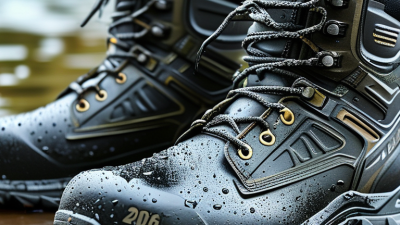
Check the certificate, not just the product description. EN ISO 20345:2021 defines 200 J toe-impact protection and 15 kN compression resistance for suitable safety footwear. These tests target the toe cap, not the entire shoe. A credible test document should identify the exact model, standard edition, laboratory, and tested size range. Be cautious when sellers mention “steel toe” without test evidence.

The outsole should maintain grip on wet ceramic, concrete, and algae-prone surfaces. Look for documented slip testing and channels that release water quickly. Drainage holes can help, but they may also admit sharp debris. That trade-off is easy to overlook. Fit matters too. Leave enough toe room for swelling, yet prevent heel lift when climbing a wet ladder. I would inspect the toe cap after repeated bending, because laboratory impact results cannot predict every field condition. Numbers can mislead. Personal trials, maintenance records, and replacement intervals still matter.

Choose Water Resistance Through IEC 60529 IPX7 or IPX8 Ratings

How to Choose the Best Safety Water Shoes in 2026?

When selecting safety water shoes, I start with the IEC 60529 IPX rating. IPX7 protects against temporary immersion in water up to one metre for 30 minutes. IPX8 covers continuous immersion beyond one metre, under conditions specified by the manufacturer. The tested depth and duration should appear in the product documentation. An IPX8 rating is not a universal promise of unlimited waterproofing. That distinction matters.

In practical use, I check whether the upper, seams, tongue, and closure system keep water from entering quickly. I have seen shoes with strong ratings still feel unsafe on wet tiles because their outsoles lacked dependable traction. IPX ratings only address water ingress. They do not measure grip, impact resistance, puncture protection, chemical exposure, or comfort. Higher is not automatically safer. A poorly fitted shoe can trap water, slide inside, and cause blisters during long shifts.

For shoreline work, boat maintenance, or frequent shallow-water tasks, IPX7 may provide adequate protection when the shoe drains efficiently afterward. Choose IPX8 when deeper or longer immersion is genuinely expected, but verify its exact test conditions. Look for a stable heel, protective toe structure, quick-drying lining, and a sole tested for wet surfaces. Rinse the shoes after use and inspect the seams regularly. My own judgment is sometimes imperfect; real workplaces are harsher than laboratory tests. Water temperature, mud, wear, and repeated bending can change performance over time.

Compare Fit, Drainage, and Durability Using ASTM F2412 Test Methods

How to Choose the Best Safety Water Shoes in 2026?

ASTM F2412 test methods help verify protective footwear performance, but they do not certify every water shoe feature. The standard examines hazards such as impact, compression, puncture, and electrical resistance. It does not measure drainage speed, wet grip, or personal comfort. That distinction matters.

Fit comes first. A secure heel should stay planted when you climb a wet ladder. Your toes need room to move, but not enough space to slide forward. The U.S. Bureau of Labor Statistics continues to identify slips, trips, and falls as significant workplace injury sources.

Therefore, test shoes with the socks and foot position used on site. I would not trust a perfect indoor fit alone. Wet conditions expose small mistakes.

Drainage depends on mesh panels, channel design, and removable insoles.

Pour water through the shoe, then walk ten steps. Weighing the shoe before and after testing gives a rough drainage comparison. Durability requires more than thick rubber. Check stitching, toe bonding, and outsole separation after repeated flexing. ASTM F2412 results can support protective claims, but they cannot replace field inspection.

Tips:

Check the ASTM marking and test scope. Confirm whether the shoe is actually rated for your hazard. Replace it when the tread becomes smooth, even if the upper still looks acceptable. Industry reports often focus on injury cost, not comfort. That leaves a practical gap. Feedback from workers remains valuable.