What Type of Anti Slip Baby Socks Are Best?
Choosing the right Anti Slip Baby Socks requires more than checking a cute pattern or soft color. Babies crawl, pull themselves up, and test every surface with uncertain steps. A loose sock can twist under the heel. A rough seam can leave red marks. A weak grip can become useless after several washes.
Pediatric podiatrist Dr. Tracy Byrne has warned, “Babies should be barefoot as much as possible.” Her point matters. Socks should protect warmth and provide light traction, not replace natural foot movement. The American Academy of Pediatrics also emphasizes safe environments and supervision because falls remain a common source of childhood injury. Socks alone cannot prevent accidents.
Market research from Grand View Research reports continued growth in the global baby footwear market, driven partly by safety-focused designs and changing parent preferences. However, industry categories differ. Some reports combine shoes, slippers, and socks, so their figures should not be treated as exact Anti Slip Baby Socks sales. That limitation deserves attention.
A practical evaluation should examine silicone or rubber grip coverage, breathable cotton blends, stretch recovery, and flat toe seams. Check whether the heel stays centered after crawling. Wash them repeatedly. See what changes.
No sock is perfect.
The strongest choice usually balances traction, comfort, fit, and material transparency. Parents should also verify product testing claims, care instructions, and applicable textile standards. A label saying “non-slip” is not enough. Real performance depends on the floor, moisture, washing method, and the baby’s movement. This guide examines those details, using available research, expert guidance, and everyday testing experience.
What Anti-Slip Baby Socks Are and How They Work
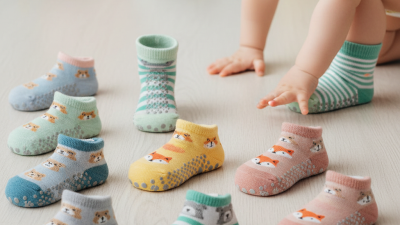
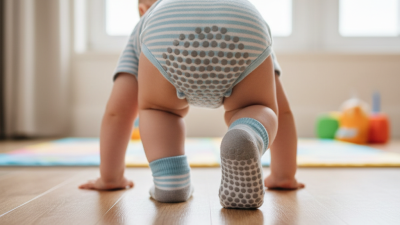
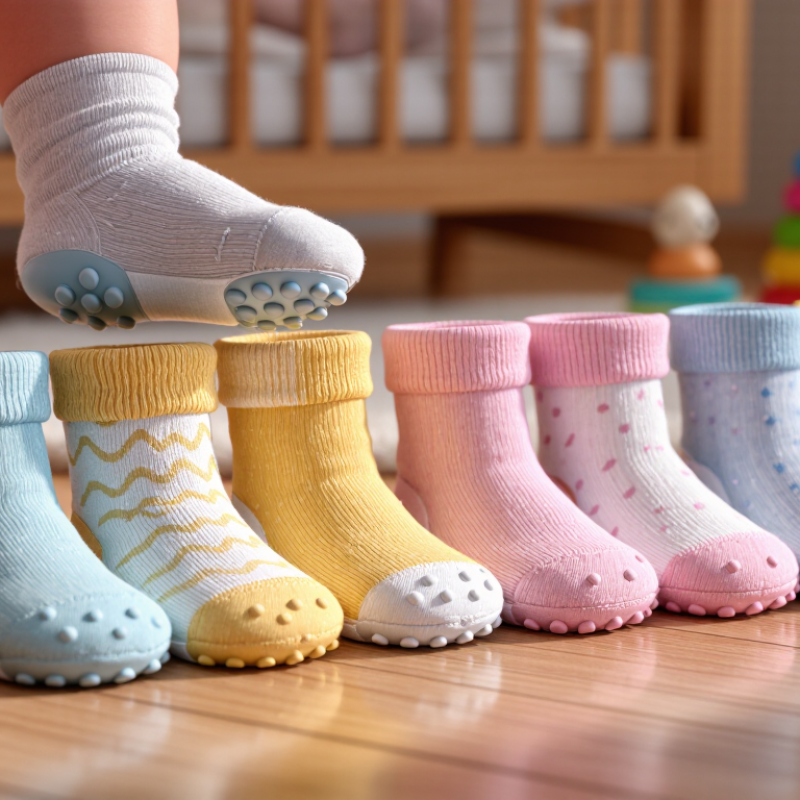
Anti-slip baby socks are ordinary socks with textured grips on the sole. These grips are usually made from silicone or soft rubber. They increase friction between the sock and smooth floors. That extra contact can reduce sliding during crawling, cruising, or early walking.
In my experience, the best pair has evenly spaced grips across the heel and forefoot. A few small dots may not provide enough traction. The sock should fit closely without squeezing the toes or leaving deep marks around the ankle. Cotton-rich fabric can feel soft and breathable, while a small amount of stretch helps the sock stay in place. Loose socks can twist under a baby’s foot. That defeats the purpose.
Check the grips after washing. They should remain flexible, attached, and free from peeling edges. Avoid loose threads, hard seams, and decorations that can detach. A simple floor test helps: place the socks on a clean, dry surface and watch the baby take several supported steps. Still, no sock prevents every fall. Wet floors, uneven surfaces, and oversized socks remain hazards. I once assumed thicker grips were always better, but bulky soles sometimes reduced natural foot movement. A thinner, flexible design may work better for daily indoor use. Supervision still matters, especially when a baby is learning balance.
What Type of Anti-Slip Baby Socks Are Best?
Anti-slip baby socks work best when they combine secure fit, flexible fabric, breathable construction, and grip material placed across the parts of the sole that contact the floor. The scores below are practical selection ratings on a 1–5 scale, not laboratory measurements.
Look for soft silicone or rubberized grips that cover the forefoot and heel without making the sole stiff. A snug heel, enough room for the toes, moisture-managing fabric, and a design that stays flat after washing are important for comfort and stability. Socks should be checked regularly for wear and should not replace close supervision on slippery surfaces.
Common Grip Patterns and Sole Materials
Grip patterns work best when they match how a baby moves.
Small dots or short rubber lines can add traction across the forefoot, where crawling babies often press down. Wider patches may suit early walkers who place more of the foot on the floor. But a dense pattern is not automatically safer. Raised grips can feel stiff, and very small dots may wear smooth with frequent washing.
Sole material matters too. Silicone and flexible rubber commonly provide a tacky feel on clean, dry indoor floors. They should bend easily when you gently fold the sock, rather than forming a hard, shoe-like base. Some socks use textured fabric instead of applied grips. These can feel softer, though traction may vary with the floor and the fabric’s condition. No sock prevents every slip. Check that the sole stays flexible and the fit does not bunch beneath the toes.
Look closely at the floor your child uses most. Smooth tile differs from a low-pile rug, and damp floors can reduce grip. After washing, inspect the dots or lines for peeling, flattening, or cracks. I’ve found that a simple pattern can be easier to assess than a crowded one, though that is not a rule. Fit matters. A loose heel can twist the grips away from the floor.
How Sock Fit and Fabric Affect Comfort and Safety
What Type of Anti Slip Baby Socks Are Best?
The best anti-slip baby socks should fit securely without squeezing tiny toes. A loose sock can twist under the foot, while a tight cuff may leave red marks. Check the fit when your baby is standing or crawling, not only when resting. There should be gentle stretch around the ankle and enough room for natural toe movement. I used to think thicker socks were safer. In practice, bulky fabric can make movement awkward and increase bunching inside the shoe.
Fabric affects both comfort and safety. Breathable cotton, bamboo viscose, or soft blended yarns can help manage warmth and moisture. A small amount of stretch fiber helps the sock keep its shape. However, fabric claims can be misleading. A soft-feeling material may still trap heat if it is too dense. Look for smooth seams, flexible cuffs, and printed or securely attached grips. Rubberized dots should cover key contact areas, especially beneath the heel and forefoot. Anti-slip socks support stability, but they cannot replace supervision on wet or uneven floors.
Tips: Measure your baby’s foot and compare it with the size chart. Inspect the socks after washing. Discard pairs with loose threads, hardened grips, or stretched openings. Feel the inside before dressing your baby. If the fabric feels scratchy to your hand, it may irritate delicate skin. Test one pair during short play sessions, then check for redness, dampness, or cold toes. Adjust your choice, because comfort needs can change quickly.
What Type of Anti Slip Baby Socks Are Best? — How Sock Fit and Fabric Affect Comfort and Safety
| Sock feature |
What to look for |
How it affects comfort and safety |
Practical check |
| Fit and sizing |
A close, comfortable fit that matches the child’s current foot length, with room for natural toe movement. |
Socks that are too tight may leave marks or restrict movement. Socks that are too loose can bunch up or slip off, reducing grip. |
Check the size guide and inspect the toes and ankle after wearing. The sock should stay in place without squeezing. |
| Grip pattern |
Flexible silicone or rubberized tread distributed across the areas that contact the floor, especially the sole. |
A well-placed tread can improve traction on smooth indoor flooring. Grip does not guarantee that a child will not slip. |
Look for intact, evenly spaced tread. Replace socks if the grip is peeling, worn smooth, or cracked. |
| Fabric and breathability |
Soft, breathable knit fabric with a comfortable blend and a smooth interior. |
Breathable materials can help manage warmth and moisture. Fabric choice alone does not determine whether a sock is safe or suitable. |
Choose fabric that feels soft against the skin and is appropriate for the room temperature; check the care label. |
| Stretch and recovery |
Enough stretch to put the sock on easily, with cuffs that return to shape without digging into the skin. |
Good recovery helps the sock stay positioned. A tight cuff may irritate skin, while a loose cuff may allow the sock to slide down. |
After washing, check that cuffs are not stretched out and that elastic areas do not leave deep marks. |
| Seams and construction |
Flat or low-profile toe seams, securely finished edges, and no loose threads or small detachable parts. |
Smooth seams can reduce rubbing. Loose parts or damaged construction may create discomfort or other hazards. |
Turn the sock inside out to inspect seams and check for damage before use. |
| Age and activity |
A design suited to the child’s stage of movement and the intended indoor use. |
For early walkers, a secure fit and intact sole grip are useful on smooth floors. Socks are not a substitute for supervision or a suitable walking surface. |
Supervise new walkers and remove socks that bunch, twist, or slide during movement. |
General guidance: Choose socks that fit securely, feel comfortable, and have intact tread. For babies who are not yet walking, socks are mainly for warmth; follow safe-sleep guidance and avoid overheating.
How to Choose the Best Socks for Your Baby’s Needs
What Type of Anti Slip Baby Socks Are Best?
How to Choose the Best Socks for Your Baby’s Needs
Choose socks for your baby’s age, movement, and usual floor surfaces. A new crawler may need light coverage, while a standing baby may benefit from flexible grips across the sole. Look for a snug heel and a stretchy cuff that stays up without leaving deep marks. Check that toes can move freely. Fit matters.
Material affects comfort. Cotton blends can feel soft, while a little stretch may help socks stay in place. For warm rooms, choose a lighter fabric; for cooler floors, a thicker knit may feel more comfortable. Avoid loose threads, rough seams, or grips that peel after washing. It is easy to focus on grip alone, but fit and comfort matter just as much. Socks can slip or bunch, so check them during wear and replace pairs that become loose or damaged.
Tips: Follow the care label, then inspect the grips after washing. Try socks on a clean, dry floor and watch how your baby moves. Anti-slip socks do not prevent every fall, and close supervision remains important. When safe and practical, bare feet can also help babies feel the floor as they practice standing.

 Trampoline Socks
 Aqua Park Socks
 Hospital Slipper Socks
 Grip Football Socks
 Basketball Socks
 Badminton Socks
 Cycling Socks
 Running Socks
 Disposable Socks Bowling Alley Socks
 Disposable socks
 Warm Colorful Striped Crew Socks for Women
 Custom Unisex Crew Socks Breathable Socks
 Digital Printing Vintage Crew Socks
 Animal Fuzzy Cartoon Crew Socks for Women
 Cotton Flower Ankle Socks Low Cut Socks
 Thick Christmas Festival Crew Socks
 Cotton Cute Anti Slip Baby Ankle Socks with Cartoon
 Colorful Soft Baby Socks Anti-slip
 Non Slip Soft Ankle Baby Toddlers Socks
 Cartoon Baby Socks With Grips Crew Walking Socks
 Baby Socks Floor Grip Mid-tube Socks with Cartoon