- Home
- Products
- Customization
- About Us
- Blogs
- Contact Us
 Trampoline Socks
 Aqua Park Socks
 Hospital Slipper Socks
 Grip Football Socks
 Basketball Socks
 Badminton Socks
 Cycling Socks
 Running Socks
 Disposable Socks Bowling Alley Socks
 Disposable socks
 Warm Colorful Striped Crew Socks for Women
 Custom Unisex Crew Socks Breathable Socks
 Digital Printing Vintage Crew Socks
 Animal Fuzzy Cartoon Crew Socks for Women
 Cotton Flower Ankle Socks Low Cut Socks
 Thick Christmas Festival Crew Socks
 Cotton Cute Anti Slip Baby Ankle Socks with Cartoon
 Colorful Soft Baby Socks Anti-slip
 Non Slip Soft Ankle Baby Toddlers Socks
 Cartoon Baby Socks With Grips Crew Walking Socks
 Baby Socks Floor Grip Mid-tube Socks with Cartoon
Leave Your Message
-
Phone
-
E-mail
-
Whatsapp
-
WeChat

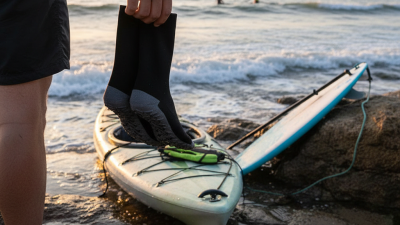
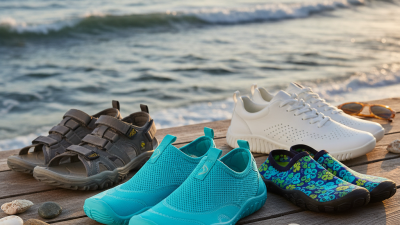
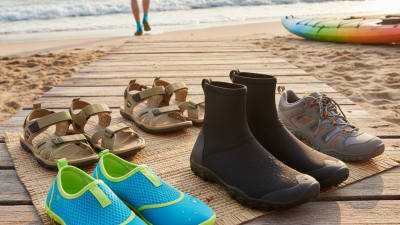
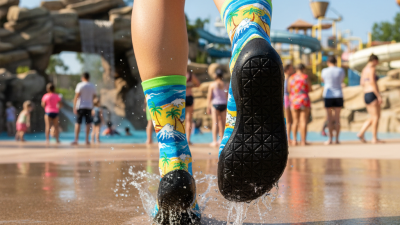
Choosing the right China aquatic footwear manufacturer requires more than comparing prices on a supplier list. Global buyers must examine product quality, production experience, communication, and export reliability. A factory may offer attractive quotations, yet weak stitching or poor drainage can create costly returns. This guide explores manufacturers that serve beaches, pools, water parks, and outdoor activities. It focuses on practical evidence rather than impressive promises.
Aquatic Footwear should feel secure on wet surfaces, dry reasonably quickly, and remain comfortable during extended use. Buyers should inspect outsole grip, mesh strength, seam finishing, odor control, and size consistency. Sample testing matters. Walk across wet tiles. Bend the sole repeatedly. Check whether sand enters through the openings. These small checks often reveal larger production risks.
Reliable manufacturers should explain their materials, quality procedures, packaging options, and lead times clearly. They should also provide relevant test reports and export documentation when requested. However, no supplier is perfect. Even experienced factories can face delays, material changes, or inconsistent batches. That possibility deserves honest discussion. Buyers should confirm inspection standards, replacement policies, and communication routines before placing large orders. Factory audits, video inspections, and third-party testing can strengthen confidence. Personal experience shows that fast replies are useful, but they do not replace technical proof.
The manufacturers discussed here are evaluated through a buyer-focused lens. Their capabilities, product ranges, customization services, and international supply experience receive careful attention. The goal is not to promote one universal winner. It is to help importers make clearer decisions, reduce avoidable surprises, and select Aquatic Footwear that performs in real water environments.
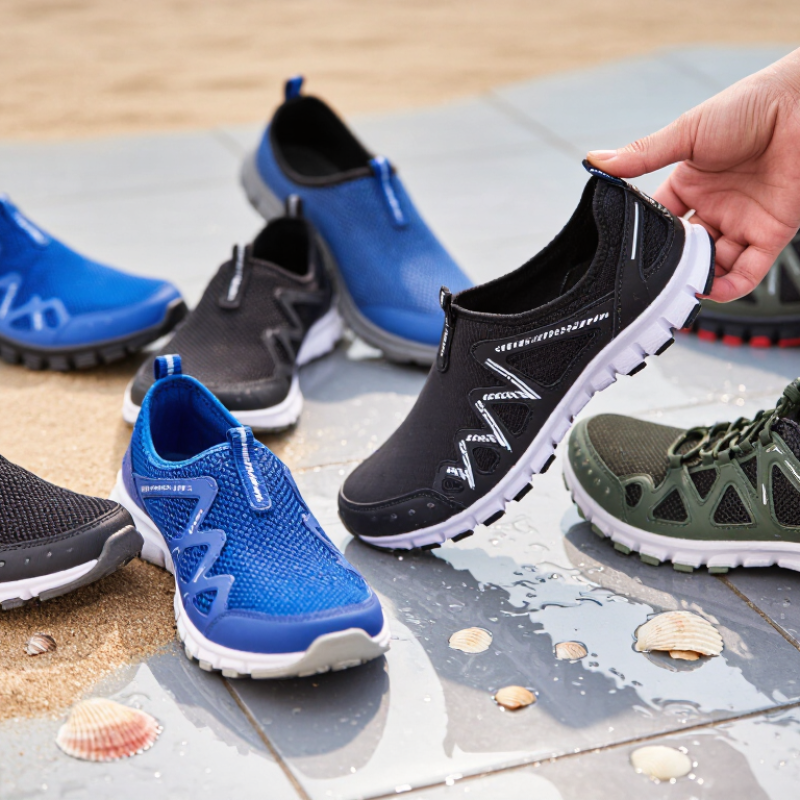
A top aquatic footwear manufacturer combines practical experience with controlled production. Years in the field should translate into better drainage, secure grip, and comfortable fit. Ask how the factory tests footwear on wet tiles, rocks, and changing temperatures. These details reveal more than polished product photos.
Reliable manufacturers explain their materials clearly. They should identify the upper, sole, lining, adhesives, and recycled content when applicable. They also maintain documented quality checks, from mold inspection to final packing. Independent testing can support claims about slip resistance, colorfastness, and material safety. Strong suppliers welcome sample reviews and provide traceable production records. Communication matters too. Accurate timelines and honest capacity estimates protect global buyers from costly delays.
Tips: Request pre-production samples. Check size consistency across several pairs. Ask for recent test reports, audit records, and corrective-action examples. A factory that only promises perfection may deserve closer questioning. No process is flawless. The real measure is how quickly and openly the manufacturer handles defects, late materials, or failed tests. Start with a limited order, review field feedback, and adjust the design before scaling. Test before scaling.
| Evaluation Dimension | Verified Industry Requirement or Fact | Evidence to Request | Why It Matters to Global Buyers |
|---|---|---|---|
| Product Definition | Aquatic footwear generally includes water shoes, swimming shoes, beach shoes, surf shoes, and footwear designed for wet or slippery environments. There is no single worldwide legal definition covering every consumer aquatic shoe. | Product specification, intended-use statement, technical drawings, and material list. | A clearly defined product prevents unsuitable claims and helps align testing with the actual use environment. |
| Quality Management System | ISO 9001:2015 provides a recognized framework for quality management systems. Certification does not automatically prove product quality, but it demonstrates that defined quality processes are in place. | Current ISO 9001 certificate, certification scope, issuing body, and certificate-validity information. | A documented system improves consistency in sampling, production control, corrective actions, and customer complaint handling. |
| Incoming Material Control | Common aquatic-footwear materials include EVA, rubber, TPU, synthetic mesh, polyester, nylon, webbing, adhesives, and molded components. Material specifications should be approved before mass production. | Material inspection records, supplier declarations, lot numbers, color standards, and approved samples. | Material variation can affect flexibility, drainage, odor, bonding, color, comfort, and outsole performance. |
| Production Inspection | A reliable factory should use incoming, in-process, and final inspections. ISO 2859-1 is a recognized sampling system for inspection by attributes, but the buyer must define the applicable AQL and acceptance criteria. | Inspection plan, defect classification, AQL level, inspection reports, and corrective-action records. | It creates an objective method for controlling stitching, molding, bonding, sizing, appearance, and packaging defects. |
| Independent Laboratory Testing | ISO/IEC 17025 is the international standard for the competence, impartiality, and consistent operation of testing and calibration laboratories. | Test report showing the laboratory name, accreditation scope, test method, sample identification, and test date. | Independent testing reduces the risk of relying only on internal factory claims. |
| Chemical Compliance for the EU | EU Regulation (EC) No. 1907/2006, commonly known as REACH, regulates chemical substances and restricts or controls certain substances in products and supply chains. | REACH restricted-substance test report, material declarations, and SVHC communication statement where applicable. | Chemical documentation supports lawful market access and helps manage risks from dyes, plasticizers, metals, adhesives, and coatings. |
| Children’s Product Compliance in the United States | For applicable children’s products, the U.S. Consumer Product Safety Improvement Act includes a 100 parts-per-million limit for lead in accessible parts and a 0.1% limit for each specified regulated phthalate. | Children’s product test reports, component test records, and a General Certificate of Conformity when required. | The requirements are particularly important for children’s water shoes, sandals, and pool footwear sold in the United States. |
| European General Product Safety | The EU General Product Safety Regulation, Regulation (EU) 2023/988, applies to covered non-food consumer products placed on the EU market from 13 December 2024. | Risk assessment, technical documentation, product identification, traceability information, and safety instructions. | It requires buyers and supply-chain partners to treat product safety, traceability, and corrective action as continuing obligations. |
| Slip-Resistance Evaluation | ASTM F2913 provides a test method for measuring the coefficient of friction between footwear and floor materials. It does not create one universal pass value for every aquatic-footwear application. | Test report identifying the outsole compound, wet-test condition, test surface, load, speed, and acceptance threshold. | Wet pool decks, rocks, boat surfaces, and sandy areas can require different outsole designs and test conditions. |
| Outsole Flex Resistance | ISO 17707 specifies a test method for evaluating the flex resistance of footwear outsoles. The buyer should set the required performance level according to the product’s intended use. | Flex-resistance test method, number of cycles, conditioning requirements, and failure definition. | Adequate flex durability helps reduce cracking and premature outsole failure during walking, swimming, and travel. |
| Outsole Abrasion Resistance | ISO 20871 provides a footwear test method for assessing the abrasion resistance of outsoles. Results should be compared using the same test method and conditions. | Abrasion test report, outsole material specification, specimen details, and measured mass or volume loss. | Abrasion performance is relevant to rough pool surfaces, beaches, decks, rocks, and repeated recreational use. |
| Water Drainage and Drying Design | Drainage depends on mesh construction, perforations, insole design, lining, outsole channels, and material water retention. There is no single globally mandatory drying-time value for all consumer aquatic footwear. | Buyer-defined immersion and drainage protocol, before-and-after weight, drying-time record, and wear-trial feedback. | Effective drainage improves comfort and can reduce prolonged moisture exposure, odor, and unnecessary product weight. |
| Bonding and Construction Strength | Aquatic footwear commonly combines stitched, molded, welded, or adhesive-bonded components. Bonding strength should be tested after relevant wet and conditioning exposure. | Peel or attachment-strength results, wet-conditioning procedure, production samples, and failure analysis. | Poor bonding can cause outsole separation, seam opening, or component detachment during repeated water use. |
| Size and Fit Consistency | A professional supplier should control last dimensions, size grading, foot-length measurements, opening circumference, and left-right symmetry through approved specifications. | Size chart, measurement tolerances, graded patterns, fit samples, and pre-shipment measurement report. | Consistent sizing lowers return rates and supports online and international retail sales. |
| Traceability | Finished goods should be traceable to production dates, material lots, purchase orders, inspection records, and packaging information. | Lot-code format, carton labels, production records, material-batch records, and recall procedure. | Traceability enables targeted investigation and corrective action instead of disrupting every shipment. |
| Order and Export Readiness | A capable export supplier should provide clear sampling procedures, production schedules, packaging specifications, shipping documents, and communication in the buyer’s required format. | Approved purchase-order template, packaging specification, carton test record, commercial invoice sample, packing list, and shipment history with sensitive information removed. | Operational discipline helps reduce delays, labeling errors, packaging damage, and customs-document problems. |
Note: Regulatory applicability depends on the destination market, product category, age group, and intended use. Test methods and legal requirements should be confirmed against the current edition or official guidance before purchase.