Choosing the best Cotton Socks for wholesale is not just a price comparison. Buyers must balance comfort, durability, consistent sizing, and dependable supply. Textile Exchange’s Materials Market Report 2024 estimates that global fiber production reached 124 million tonnes in 2023. That figure shows the scale of material sourcing, but it does not measure sock quality. Numbers need context.
A practical evaluation starts with the yarn and knit. Ask suppliers for the cotton composition, yarn specifications, fabric weight, and details about reinforced heels and toes. Then request samples and check them after washing: look for shrinkage, pilling, loose elastic, and uneven seams. Small details matter. Test color consistency across production lots, and confirm size tolerances, packaging, minimum order quantities, and lead times in writing. For stronger verification, ask for recent test reports and documentation supporting material claims. Requirements can differ by destination market, so buyers should confirm applicable standards with qualified testing providers.
No single cotton grade guarantees a great sock. A soft sample may still lose shape, while a lower-priced offer can carry hidden costs through defects or delayed delivery. I would not judge a supplier from one perfect sample alone; production consistency is harder to prove. This guide helps wholesale buyers compare the evidence, ask sharper questions, and choose Cotton Socks suited to their customers and purchasing needs.
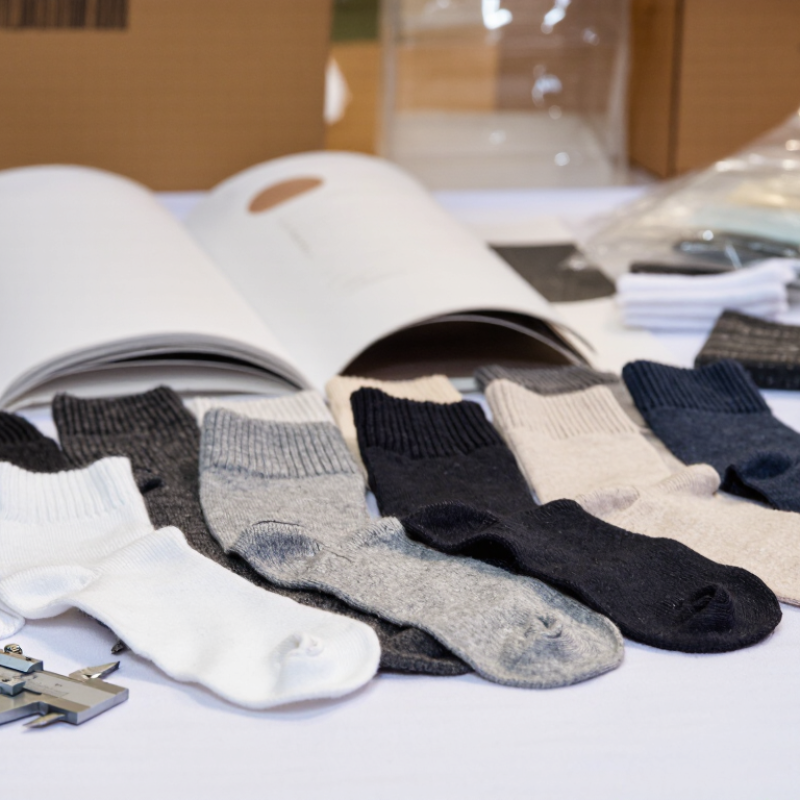
Wholesale buyers should define who will wear the socks and where they will use them before comparing prices. A school uniform program may need durable, comfortable pairs in standard colors. Outdoor retailers may prefer thicker cotton blends with reinforced heels and toes. Corporate gift buyers often care more about neat packaging and a consistent appearance. Know the wearer. Also consider climate, washing frequency, and the footwear typically worn with each pair.
Match the product to those daily conditions. For warm indoor settings, lighter fabric and a smooth toe seam can improve comfort. For long shifts, cushioning and secure cuffs may matter more. Ask suppliers for fabric composition, size measurements, construction details, and care guidance. Then request samples and check them after several washes. A sample is useful, but it cannot represent every production batch perfectly. I have seen buyers focus on softness alone and overlook how quickly loose cuffs can become a complaint.
Tips: Write a short use-case brief before requesting quotes. Include wearer age range, season, shoe type, preferred colors, and expected wash frequency. Test samples with a few representative users, and record specific feedback rather than relying on “feels good.” If needs vary, separate the order into clear product categories instead of forcing one sock to serve everyone.

Standard moisture regain of common textile fibers (%)
Buyer takeaway: Cotton’s conventional moisture regain is about 8.5%, higher than polyester’s and nylon’s, while wool’s is higher still. Use fiber choice as one screening factor when matching socks to customer needs; moisture regain alone does not measure sweat-wicking performance or overall comfort. Values are approximate conventional figures under standard textile-testing conditions.
For wholesale buyers, cotton grade is only one part of sock quality. Cotton grades can describe fiber length, cleanliness, and consistency, but grading terms may vary between suppliers. Ask for the actual fiber specifications, not just a grade name. Longer fibers can create smoother yarn with fewer exposed ends, while shorter fibers may feel rougher and pill sooner. Feel matters. Check a washed sample, too; a soft new sock can change after laundering.
Blends alter how socks perform in daily use. Cotton with polyester often dries faster and holds its shape better, while a small amount of elastane helps the cuff and arch recover after stretching. More cotton is not automatically better. A dense, all-cotton knit may feel warm, but it can stay damp during long shifts. Compare fabric weight, knit density, and stretch alongside the fiber percentages. Rub the fabric gently and inspect the toe seam for bulky ridges. Ask suppliers how samples are tested, and compare identical sizes under the same wash conditions. This takes time, and the first sample may still mislead. Record the details before placing a bulk order.
For wholesale buyers, sock construction is easiest to assess on a physical sample, not a specification sheet alone. Turn the sock inside out and inspect the toe seam. A bulky join can rub against shoes, while a flatter seam usually feels smoother. Check whether heel and toe areas have reinforcement, and look for loose yarns around the cuff. These details matter during daily wear. They also affect how consistent a large order feels from pair to pair.
Fit needs more than a size label. Compare the sock’s foot length and cuff stretch with the intended size range, then try it with an ordinary shoe. The heel should stay in place without pulling the fabric tight across the toes. Too much elastic can leave marks; too little may let the sock slide down. Neither issue shows well on a hanger.
Durability is worth testing, not guessing. Wash samples according to the proposed care instructions, then check for shrinkage, thinning, pilling, and relaxed cuffs. Cotton-rich yarns can feel soft, but cotton content alone does not predict service life. Stitch density and yarn quality matter too. One wash is only a clue, not proof. Repeated wear varies, and a test may miss flaws that appear later. Keep measurements and sample notes before approving bulk production.
How to Choose the Best Cotton Socks for Wholesale Buyers?
Ask suppliers to define their quality standards in writing. For cotton socks, check fiber composition, fabric weight, size tolerances, seam finishing, and elastic recovery. Request recent test reports for shrinkage and colorfastness, and confirm which production batch they cover. A neat sample is useful, but it does not prove every carton will match. Compare several pairs after washing them at home. Look for twisted cuffs, loose threads, fading, or uncomfortable toe seams. Small details matter.
Tips: Request a pre-production sample and a written inspection checklist. Ask how defects are recorded and corrected. Verify that any claimed certifications are current and relevant to the product or facility. Keep the agreed sample for comparison during bulk inspection.
Production capacity needs evidence, not just a confident sales estimate. Ask about monthly output, available knitting machines, staffing, and current order commitments. Check whether the supplier can handle your size range and packaging needs without outsourcing key steps. Confirm lead times for sampling, production, and shipping, especially during peak seasons. If possible, review factory records or arrange an independent visit. I still find capacity easy to underestimate: one delayed yarn delivery can shift an entire shipment. Request updates at clear milestones, and put agreed quantities and dates in writing.
| Evaluation Area | What to Check | Verification Method or Useful Data | Wholesale Buyer Action |
|---|---|---|---|
| Fiber composition | Confirm the cotton percentage and identify other fibers, such as polyester, nylon, or elastane. | Compare the product specification and care label with a textile laboratory report. ISO 1833 is a series of methods for quantitative chemical analysis of textile fiber mixtures; the appropriate part depends on the fibers being tested. | Specify the required fiber blend in the purchase order and request test results for the relevant sock construction. |
| Restricted substances | Check whether yarns, dyes, and finished socks meet the buyer’s chemical-safety requirements for the intended market. | Request current test reports that identify the tested product, sample, test scope, and applicable requirements. OEKO-TEX® STANDARD 100 is a product-testing and certification program; verify the certificate’s validity and scope directly. | Match the evidence to the exact product and destination-market requirements; do not rely on an unrelated certificate or an unsupported claim. |
| Quality management | Review documented controls for incoming yarn, knitting, linking or toe closing, finishing, inspection, and corrective actions. | Ask for the quality manual or process summary, inspection records, and any current ISO 9001 certificate. ISO 9001 covers quality-management-system requirements; certification alone does not guarantee a particular product’s quality. | Audit the relevant production site and confirm that the certificate and records apply to the facility making the order. |
| Dimensional consistency | Check size grading, sock length, foot length, and dimensional stability after the agreed care process. | Approve a size specification and a measurement procedure. Record pre- and post-wash measurements using a buyer-agreed laundering and measurement protocol. | Set tolerances for each size before production and inspect samples from multiple sizes and production lots. |
| Construction and workmanship | Inspect toe seams, heel shaping, elastic recovery, fabric appearance, and visible defects. | Use an approved “golden sample,” a written defect classification, and documented inline and final-inspection records. | Define critical, major, and minor defects with the supplier; agree on an acceptance-sampling plan before shipment. |
| Sampling and inspection | Ensure the inspection method and acceptance criteria are clear and consistent. | ISO 2859-1 provides sampling schemes indexed by acceptance quality limit (AQL) for inspection by attributes. An AQL is part of a sampling plan, not a guarantee that every item is defect-free. | State the inspection level, sample size, defect definitions, and acceptance/rejection numbers in the inspection agreement. |
| Production capacity | Confirm practical output for the specific style, size range, yarn, machine setup, and finishing process. | Request recent output records, available machine and shift details, production lead-time assumptions, and capacity allocation for the order. Ask for capacity by style and time period rather than a single headline figure. | Check whether the quoted capacity is available for the requested dates and whether it includes finishing, inspection, packing, and other orders already scheduled. |
| Order quantity and lead time | Clarify minimum order quantity, sample timing, production time, and shipment readiness. | Obtain a written production schedule with milestones for material procurement, sample approval, bulk production, inspection, and packing. | Confirm how changes to quantity, color, or size mix affect the schedule and any minimums. |
| Traceability and lot control | Check whether finished goods can be linked to production batches and material records. | Review batch or lot codes, production logs, yarn purchase records, and procedures for handling nonconforming goods. | Require lot identification on cartons or records and retain a reference sample from each approved production lot. |
| Packing and shipment readiness | Verify folding, labeling, carton count, carton markings, and protection during transport. | Approve a packing specification and a pre-shipment checklist; compare carton measurements and weights with the shipping plan. | Include packaging, labeling, and carton-marking requirements in the purchase order and inspect them before dispatch. |
Note: Testing requirements, tolerances, sampling plans, order quantities, and lead times should be agreed in writing for each product and destination market. Supplier capacity figures should be supported by current, style-specific production records.
Compare the full purchase cost, not only the quoted price per pair. Cotton content, yarn quality, cushioning, and size range can affect both price and customer satisfaction. Ask suppliers to price the same specifications, such as crew length, color, and packaging. Then compare sample costs, customization charges, and freight. A low unit price may look attractive, but added costs can change the calculation. Small details matter.
Tips: Request a written quote showing price breaks at several quantities. Check whether the minimum order applies to each color or to the whole order. A 1,000-pair minimum sounds manageable until each color requires a separate run. Confirm payment terms and whether sample fees are refundable. Keep the specification sheet beside each quote; it makes differences easier to spot.
Delivery terms deserve the same attention as pricing. Ask when production starts, how long sampling takes, and whether the quoted lead time includes transit. Confirm the shipping method, delivery location, and who pays duties or other applicable charges. Request updates before key dates, especially if stock is needed for a seasonal launch. Timing can slip. I would also leave a buffer, though the right amount depends on the supplier and route. Get delivery estimates in writing, and clarify what happens if production or shipping is delayed.